
Coal bunkers store coal between the conveying system and boiler feeding system. Reliable discharge is essential for stable power plant operation.
However, coal bunker blockage in India can occur because of fine coal, moisture, long storage time, compaction, unsuitable bunker geometry, and ineffective flow-aid equipment. Common problems include wall buildup, caking, bridging, ratholing, and intermittent discharge.
1. Main Causes of Coal Bunker Blockage
Fine Coal and Variable Properties
Coal properties can vary in moisture, particle size, and ash content. Fine and damp coal is more likely to compact, adhere to bunker walls, and form bridges.
Common symptoms include:
- Wall buildup
- Caking
- Bridging
- Ratholing
- Intermittent discharge
Moisture and Monsoon Conditions
High humidity and rainfall during India’s monsoon season can increase coal moisture. Damp coal becomes more cohesive, while fine particles may agglomerate and restrict flow.
Bunker Geometry and Flow Pattern
Bunker diameter, hopper angle, outlet size, wall condition, and internal structures affect coal movement. Uneven flow can create stagnant zones and ratholing, eventually leading to blockage.
Long Storage and Compaction
Coal stored for long periods is compressed by the material above it. Fine particles and moisture can form hard deposits that are difficult to remove with conventional equipment.
2. Warning Signs
Common signs of developing blockage include:
- Reduced or intermittent discharge
- Coal buildup near the walls
- Frequent use of air cannons or vibrators
- Repeated manual cleaning
- Unstable downstream coal feeding
- Material remaining inside while the outlet continues to discharge
3. Operational Risks
Coal bunker blockage can cause:
- Unstable coal feeding
- Boiler load fluctuations
- Equipment shutdowns
- Increased maintenance
- Safety risks during manual cleaning
Manual intervention may expose workers to falling material, dust, work at height, and confined-space hazards.
4. Traditional Clearing Methods
Manual Cleaning
Manual cleaning can restore flow but is labor-intensive, time-consuming, and potentially unsafe.
Air Cannons
Air cannons can break some localized arches, but may be less effective against thick wall buildup or heavily compacted coal.
Vibrators
Vibrators may improve flow in some applications, but their effect can be limited when coal has formed thick deposits or stagnant zones.
5. Mechanical Anti-Blocking Solution
HNMY’s Intelligent Variable Inclination Vortex Anti-Blocking Machine uses a rotating mechanical structure to assist coal movement inside bunkers and silos.
The system works near the inner wall to help:
- Reduce wall buildup
- Disturb developing bridges
- Reduce stagnant zones
- Improve material movement toward the outlet
- Support more consistent discharge
Its variable-inclination scraper can be configured according to the bunker structure and operating conditions.
The system can also support scheduled operation, automatic control, remote operation, and periodic flow assistance, reducing the need for repeated manual cleaning.
6. Retrofit Existing Coal Bunkers
A retrofit solution may be suitable when the existing bunker remains structurally serviceable but continues to experience blockage.
The following information should be evaluated:
- Coal moisture and particle size
- Bunker diameter and height
- Outlet size and hopper angle
- Handling capacity
- Blockage location and frequency
- Existing air cannons or vibrators
- Available installation space
Retrofit can help address specific flow problems without replacing the entire bunker structure.
7. Conclusion
Coal bunker blockage in India is commonly related to coal fines, moisture, compaction, storage time, bunker geometry, and uneven flow.
Manual cleaning, air cannons, and vibrators may help in some cases, but recurring wall buildup, bridging, ratholing, or stagnant material may require a mechanical anti-blocking system.
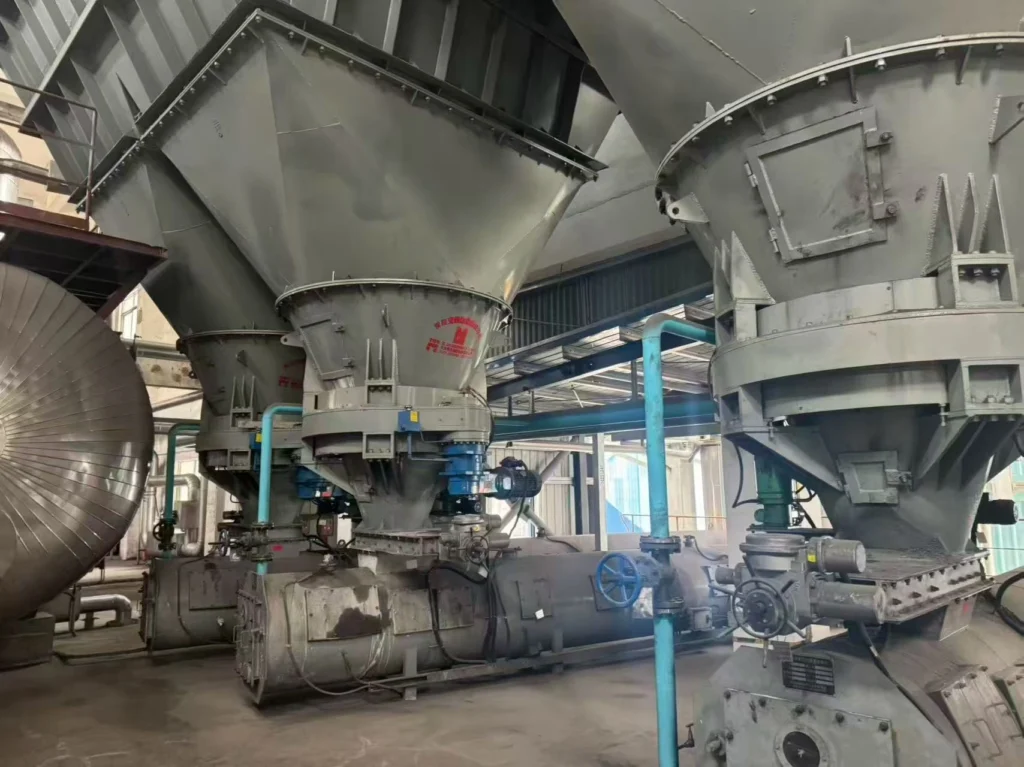
HNMY’s Intelligent Variable Inclination Vortex Anti-Blocking Machine is designed for coal bunkers, silos, hoppers, and other bulk material handling applications. A suitable configuration can be evaluated using the coal properties, bunker dimensions, outlet size, capacity, and blockage conditions.