
Fly ash silos play an important role in ash handling systems at power plants, steel plants, and cement facilities. However, due to the fine particle size, low density, and high adhesion characteristics of fly ash, fly ash silo blockage and unstable discharge remain common operational challenges.
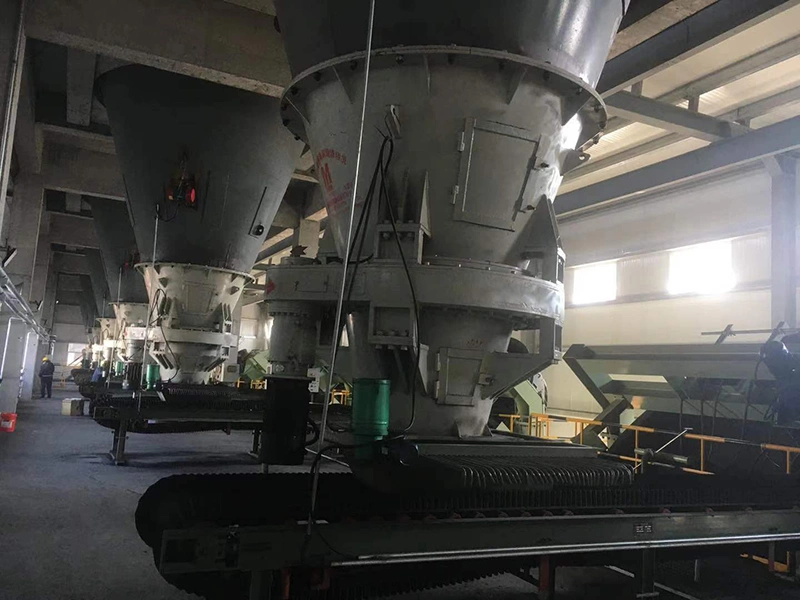
1. Common Fly Ash Silo Flow Problems
Compared to conventional bulk materials like raw coal or ore, fly ash possesses unique properties that lead to a higher incidence of flow-related malfunctions. On-site issues generally fall into the following categories:
First, material accumulation and adhesion on silo walls. Due to its fine particles and large specific surface area, fly ash easily absorbs moisture from the environment. TThis can create sticky layers on silo walls, which gradually build up and harden into solid deposits. Over time, these deposits reduce effective silo capacity and restrict the discharge channel.
Second, arching, bridging, and material suspension. Fly ash exhibits a high coefficient of internal friction; relying solely on gravity for discharge often leads to the formation of stable material arches. The silo may appear full from the outside, yet no material flows from the bottom, resulting in feed interruptions and empty running of the conveying equipment.
Third, ratholing, off-center flow, and uneven discharge. Material flows only through a narrow central opening, while peripheral powder remains stagnant, creating severe off-center flow. Fresh and old materials fail to cycle properly, leading to solidified accumulation at the bottom and increasingly frequent blockages.
Fourth, traditional unclogging methods address symptoms rather than root causes. Many facilities still rely on manual hammering, high-pressure air cannons, or silo wall vibrators to clear blockages. These methods not only require system shutdowns, high labor costs, and generate significant dust pollution, but they also offer only temporary relief; blockages recur quickly, severely undermining the overall operational stability of the ash handling system.
2. Why Fly Ash Silos Experience Blockages
Fly ash flow problems usually result from a combination of material characteristics, silo design, and operating conditions. Fly ash becomes more adhesive after moisture absorption, and fine particles tend to clump during long storage periods. Traditional silos rely mainly on gravity discharge and lack active flow-promotion mechanisms, allowing static pressure to contribute to material compaction and arch formation.Furthermore, traditional silos rely solely on gravity for discharge and lack dynamic flow-promoting mechanisms; prolonged static pressure causes the material to naturally cake and form arches. Compounding this, the continuous operation and frequent material turnover of ash handling systems mean that any obstruction in discharge leads to material accumulation and a vicious cycle of worsening blockages.
3. Automatic Fly Ash Silo Blockage Prevention Solution
Recurring blockage problems in fly ash silos cannot be solved only by emergency clearing methods. A more effective approach is to combine blockage prevention with continuous flow promotion.Intelligent Variable Inclination Vortex Anti-Blocking Machine improves bulk material handling performance by maintaining continuous movement of fine powder materials inside the silo.
This equipment requires no structural modifications to the existing silo. It utilizes a built-in, variable-angle vortex sweeping mechanism that operates online in synchronization with the production line, eliminating the need for shutdowns. By performing a 360-degree dynamic sweep of the silo walls, it continuously removes thin layers of adhered material, preventing caking and accumulation at the source. Simultaneously, the vortex disturbance breaks up stable material arches and alters the static accumulation state, transforming traditional single-point gravity flow into a uniform, vortex-driven discharge across the entire cross-section.
The retrofitted silo achieves uniform discharge across the full cross-section, significantly reducing problems such as rat-holing, flow channeling, and material flow interruption, thereby maintaining a stable and continuous flow of fine powder. The system operates automatically—either on a scheduled basis or triggered by signals from the ash handling system—eliminating the need for manual entry or manual hammering to clear blockages, which significantly reduces safety risks and maintenance costs.
4. Applications in Ash Handling Systems
Tailored for fly ash storage and conveying operations in power plants, steel mills, and cement plants, the intelligent vortex anti-blockage solution is designed for handling fine, adhesive, and highly cohesive materials commonly found in fly ash storage and conveying systems. The system provides a practical retrofit option for existing industrial fly ash silos. It helps address recurring blockage, uneven discharge, cleaning downtime, and dust-related problems.
5.Benefits of Automatic Fly Ash Silo Flow Control
Improved worker safety
Reduced silo blockage frequency
Stable ash discharge
Less manual cleaning
Fewer production interruptions