
In thermal power plants, coal processing facilities, and other bulk material handling systems, fine coal can develop flow problems during storage and discharge. Common issues include bridging, ratholing, wall buildup, caking, and poor discharge.
Fine coal reacts strongly to moisture, compaction and how it is stored. Fine particles create high inter‑particle cohesion. Higher moisture or prolonged pressure compacts the coal mass and makes discharge difficult.
Such faults cut discharge rates, bring erratic feeding and may fully plug outlets in serious cases. For power plants, inconsistent coal flow disturbs downstream conveyors and feeding equipment. Knowing how bridging and ratholing form helps select practical anti‑blockage measures.
Understanding how bridging and ratholing develop is the first step toward choosing a suitable prevention and blockage solution.
What Are Bridging and Ratholing in Fine Coal?
1. Fine Coal Bridging
Fine coal bridging occurs when compacted material forms a stable arch above the discharge outlet. This arch holds back the coal above and stops normal flow. Plenty of coal may still sit inside the silo, yet almost nothing comes out. A fully formed bridge will halt discharge entirely.
Bridging is more likely when fine coal has high cohesion, contains excessive moisture, or has remained under pressure for an extended period.
2. Ratholing
Ratholing is a different type of flow problem.
In a ratholing condition, material flows through a relatively narrow channel above the outlet while coal around the channel remains stationary. The result is a large amount of stagnant material inside the silo.
Although ratholing does not always cause an immediate blockage, it can reduce the usable storage capacity of the silo. Stagnant coal may also become more compacted or develop additional buildup over time.
If the flow condition continues, ratholing can contribute to more serious discharge problems, including bridging.
What Causes Fine Coal Bridging and Ratholing?
Multiple field factors trigger poor flow inside fine‑coal silos and coal bunkers.
1. Fine Particle Size and Poor Flowability
Fine coal contains a high proportion of small particles. The particles can generate considerable friction and cohesion, especially when the material contains a large percentage of fines.
When the coal remains stationary for a long period, these forces can make the material increasingly resistant to flow.
This is one reason why a silo may operate normally under one set of conditions but develop flow problems after a change in coal properties or operating conditions.
2. Moisture and Humidity
Moisture can have a significant effect on fine coal flow.
Wet coal is more likely to stick to silo walls and form agglomerates. In humid environments, moisture entering through poorly sealed openings can also increase the tendency of fine particles to cake.
Keeping the material and storage environment as dry as practical can help reduce wall buildup and agglomeration.
3. Long Storage Time and Compaction
The pressure acting on material increases with the depth of the stored coal. When fine coal remains in the silo for an extended period, the lower layers can become heavily compacted.
This compacted material may not flow easily when discharge starts. In some cases, part of the coal begins to move while other areas remain stationary, creating conditions for ratholing or bridging.
4. Silo Geometry and Wall Conditions
The design and condition of the silo also affect material flow.
Important factors include:
- Hopper cone angle
- Outlet size
- Silo wall friction
- Internal liner condition
- Location and amount of existing buildup
- Relationship between the outlet and the material’s flow properties
A steep enough hopper and a suitable outlet can improve flow, while rough or worn surfaces may increase resistance and encourage material buildup.
For existing silos, however, changing the entire hopper geometry is not always practical. In many cases, a targeted retrofit can be a more suitable option.
5. Limitations of Conventional Flow Aids
Vibrators and air cannons are commonly used to deal with bulk material flow problems. They can be effective in certain applications, particularly when the blockage is localized and the material responds well to impact or vibration.
But vibrators and air cannons struggle against heavily compacted fine coal and hardened wall deposits. Repeated impacts cannot sustain steady material movement. For silos suffering repeated bridging, ratholing and wall accumulation, operators must pick flow aids based on real‑world site conditions instead of sticking to one single solution.
How to Prevent Fine Coal Bridging and Ratholing
1. Control Moisture and Prevent Moisture Ingress
Controlling moisture is one of the simplest ways to reduce the risk of fine coal caking and buildup.
Where possible:
- Keep excessive moisture out of the incoming coal.
- Check silo covers, inspection openings, and seals for water ingress.
- Reduce exposure to humid air and rain.
- Avoid storing moisture-sensitive fine coal for unnecessarily long periods.
The appropriate moisture level depends on the coal characteristics and the specific process, so operating limits should be established according to actual plant conditions.
2. Improve Silo Flow Conditions
For a new silo, hopper geometry and outlet dimensions should be selected according to the material’s particle size, moisture content, bulk density, and flow properties.
For an existing silo, a complete reconstruction may not be necessary.
If the main structure remains suitable for operation, the problem can often be addressed through a targeted retrofit. Depending on the location and type of blockage, this may include mechanical flow aids, blockage-clearing equipment, or modifications around the discharge area.
This approach can reduce the amount of structural work and limit disruption to plant operation.
3. Use Active Mechanical Flow-Aid Equipment
For fine coal silos that repeatedly develop bridging, ratholing, or wall buildup, an active mechanical flow-aid system can provide a different approach to material flow control.
HNMY’s rotary silo blockage cleaning machine uses a rotating mechanical structure to disturb stagnant material and improve flow around the discharge area and silo wall.
Instead of relying only on a short-duration impact, the rotating mechanism can work on material that tends to remain in dead zones or accumulate near the wall.
For existing coal silos, bunkers, and hoppers, the equipment can be configured according to the silo dimensions, outlet arrangement, material characteristics, and site conditions.
The objective is not simply to clear a blockage after it occurs, but to improve material movement and reduce the conditions that allow buildup and bridging to develop.
4. Avoid Excessive Static Storage
Fine coal that is prone to compaction or caking should not remain stationary in the silo longer than necessary.
Where the production process allows, storage and discharge should be managed to reduce prolonged material residence time.
Routine inspections should also cover:
- Silo wall buildup
- Outlet discharge condition
- Changes in material flow rate
- Localized caking
- Ratholing or preferential flow
- Repeated blockage at the same location
Early signs of poor flow are easier to address than a fully blocked outlet, and early intervention can also reduce the need for manual cleaning.
Why Is Ratholing a Problem?
A silo with a rathole may still discharge material, which can make the problem easy to overlook.
The main issue is that a significant portion of the stored coal remains outside the active flow channel. This can lead to:
- Reduced usable silo capacity
- Longer material residence time
- Additional compaction
- Unstable discharge
- Wall buildup
- Uneven material withdrawal
- Increased risk of bridging
In other words, good silo performance is not only about whether material is coming out of the outlet. The flow pattern inside the silo also matters.
A stable and consistent flow pattern helps make better use of the available storage volume and reduces stagnant zones.
Retrofitting Existing Coal Silos to Reduce Blockage
Many thermal power plants operate coal silos, bunkers, and hoppers that were installed years ago. Rebuilding these structures can require significant investment, engineering work, and plant downtime.
When the existing silo structure is still serviceable, retrofit solutions can be considered before major reconstruction.
A practical retrofit normally starts with an assessment of:
- Silo dimensions
- Hopper and outlet geometry
- Coal properties
- Moisture content
- Typical blockage location
- Wall buildup condition
- Existing flow-aid equipment
- Required discharge capacity
Based on these conditions, a suitable mechanical flow-aid or blockage-clearing arrangement can be selected.
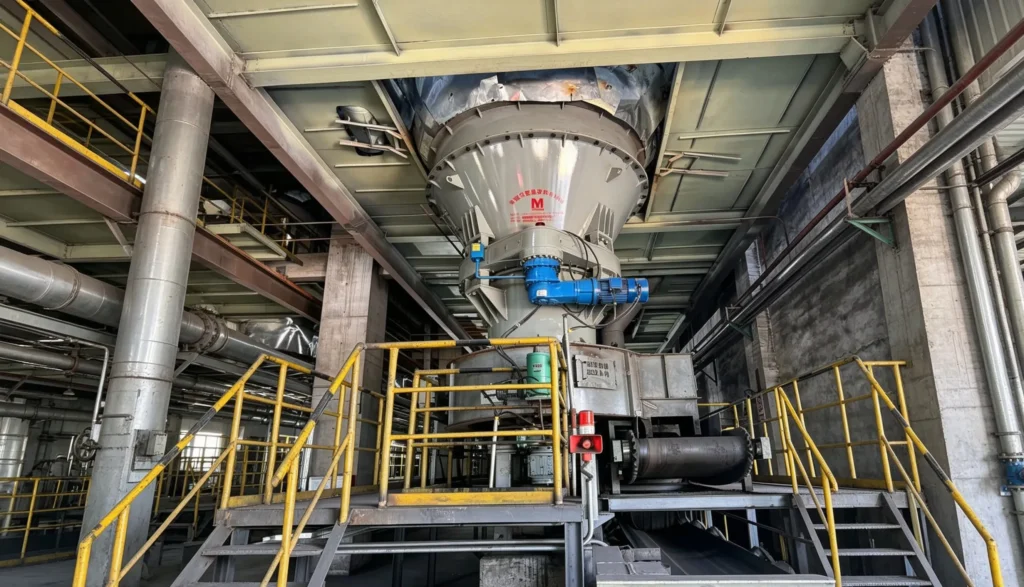
HNMY provides customized anti-blocking solutions for existing silos and bunkers. The equipment can be designed around the existing structure to improve material flow while minimizing major modifications to the silo body.
Conclusion
Fine‑coal bridging and ratholing stem from a mix of material traits and operating conditions. Moisture, particle size, compaction, storage duration, silo geometry, wall friction and existing flow aids all govern material behaviour.
Site teams should look beyond outlet‑only fixes. Moisture control, shorter static storage, proper silo maintenance and well‑matched flow‑aid hardware all lower recurring blockage risk.
For older coal silos plagued by persistent flow faults, targeted retrofits offer an alternative to full reconstruction. Matching equipment to coal properties, silo layout and actual blockage locations stabilizes discharge and cuts manual block‑clearing work.