
Indonesia has a large and active cement industry, where silos and hoppers are used throughout the production process to store and discharge cement, raw meal, clinker-related materials, and other fine powders.
In these applications, cement silo material buildup can develop on silo walls, hopper cones, and around discharge areas. In Indonesia, high humidity, seasonal rainfall, and changes in material moisture can make powder storage and handling more challenging.
Fine cement powder has a large surface area and can become more cohesive when exposed to moisture. During extended storage, powder may gradually adhere to internal surfaces and form deposits. As these deposits become thicker, they can reduce the effective flow area inside the silo.
Material buildup does not usually cause a complete blockage immediately. Early signs may include unstable discharge, uneven material flow, ratholing, and intermittent powder flow. If hardened deposits eventually break away, large pieces of material can enter the discharge outlet and interfere with downstream conveying equipment.
For Indonesian cement plants, identifying buildup at an early stage and addressing the conditions that contribute to it is often more practical than relying on manual cleaning after the problem becomes severe.
What Causes Cement Silo Material Buildup?
Material buildup inside cement silos and hoppers can be influenced by powder properties, environmental conditions, equipment condition, and operating practices.
In Indonesia, humidity and seasonal weather conditions may also affect the way fine powders behave during storage.
1. Fine Powder Properties and Moisture
Cement and raw meal are fine powders with relatively high surface area. When moisture enters the silo, the powder can become more cohesive and easier to stick to the wall.
Poor sealing around silo roofs, inspection openings, manholes, and flanges can allow humid air to enter. In some plants, temperature differences between the stored material and the silo wall may also cause condensation.
Once moisture is present, small amounts of powder can adhere to the wall and gradually develop into a thicker layer of cement silo material buildup.
2. Silo and Hopper Conditions
The geometry of a silo or hopper has a direct effect on material flow.
Some older silos were designed according to material characteristics and operating conditions that were different from those used today. Changes in cement composition, particle size, moisture, or production conditions can affect the way powder moves through the silo.
Surface condition is another factor. Worn or damaged liners, rough internal surfaces, and deteriorated lining materials can increase friction between the powder and the silo wall.
This can create areas where material moves slowly and begins to accumulate.
3. Long Storage Time and Material Compaction
Fine powder that remains inside a silo for a long period can become compacted under the pressure of the material above it.
High inventory levels can increase the pressure acting on the lower part of the silo. If the material does not move regularly, compacted powder may become more difficult to discharge and more likely to form caking or wall buildup.
For this reason, operating conditions and storage time should be considered when investigating recurring buildup problems.
4. Limitations of Conventional Flow-Aid Equipment
Air cannons, vibrators, and other flow-aid devices are widely used in cement plants.
These systems can be useful for improving the movement of relatively loose material. However, their effectiveness may be limited when material has already formed hard layers on the silo wall.
Repeated vibration may also transfer mechanical loads to the silo structure and surrounding components. In some applications, simply increasing the vibration or impact force does not address the area where material is continuously accumulating.
A more suitable approach may be needed when buildup repeatedly occurs in the same location.
How to Prevent Cement Silo Material Buildup in Indonesia
There is no single solution for every cement silo. The most suitable approach depends on powder properties, silo geometry, discharge arrangement, moisture conditions, and plant operating practices.
For cement plants operating in Indonesia, particular attention should be given to moisture management and the condition of existing storage equipment.
1. Control Moisture and Improve Silo Sealing
The first step is to reduce unnecessary moisture entering the silo.
Check the sealing condition of:
- Silo roof and cover
- Manholes
- Inspection openings
- Flanges and connections
- Maintenance access points
Good sealing helps reduce humid air entering the silo and lowers the possibility of condensation on internal surfaces.
Where practical, avoid keeping cement or powder materials in static storage for longer than necessary. Maintaining suitable inventory levels and applying a first-in, first-out operating principle can also reduce excessive storage time.
2. Improve the Flow Conditions Inside Existing Silos
Not every buildup problem requires a complete silo reconstruction.
If the main structure remains suitable, the problem area can often be evaluated separately. Typical focus areas include the hopper cone, lower silo section, outlet, and locations where material repeatedly accumulates.
Depending on the condition of the silo, local modifications may include replacing damaged liners, improving internal surface conditions, or adjusting the local flow arrangement.
This approach can be particularly useful for older cement silos where a complete reconstruction would involve significant cost and production downtime.
3. Use Active Mechanical Flow-Aid Equipment
For silos and hoppers troubled by repeated wall buildup, caking, bridging and unstable discharge, active mechanical flow‑aid hardware offers a robust alternative.
Instead of relying only on impact or vibration, mechanical equipment can actively disturb material around areas where powder tends to remain stagnant.
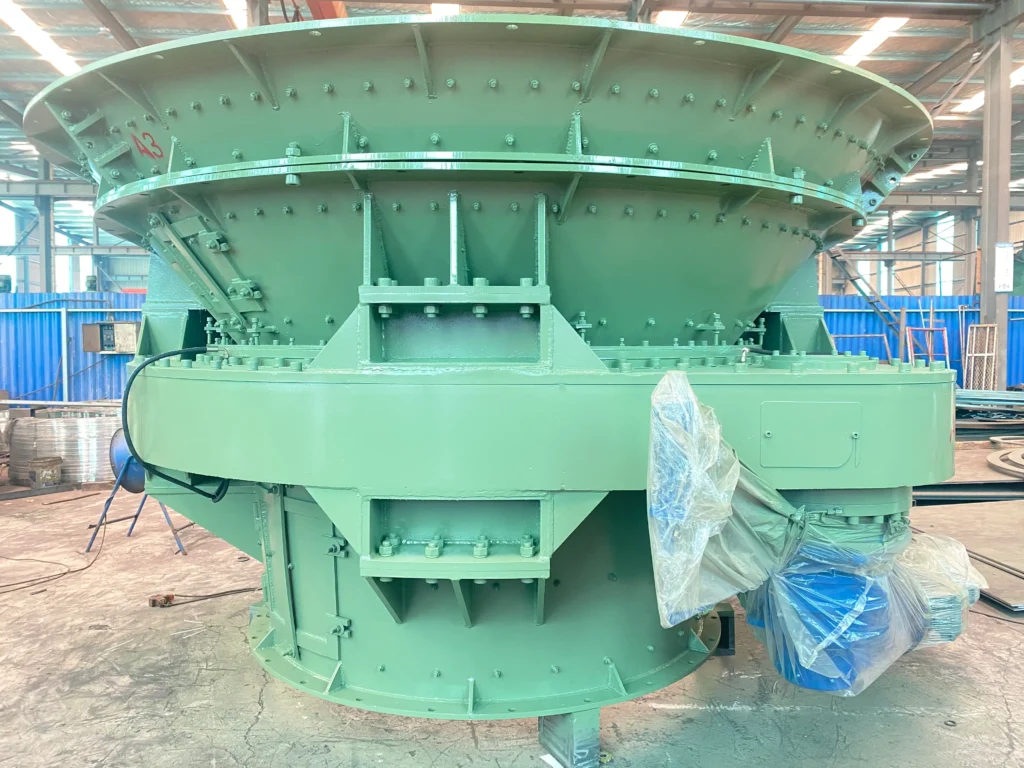
For example, the HNMY Rotary Silo Blockage Cleaning Machine uses a rotating scraper mechanism to work along the internal wall of the silo. Its variable-inclination design allows the equipment to be adapted to different silo structures and operating conditions.
The system can be considered for existing silos where wall buildup and unstable discharge repeatedly occur, without requiring the entire silo to be rebuilt.
The actual configuration should be selected according to the silo diameter, outlet size, material properties, internal structure, and required discharge capacity.
4. Monitor Buildup Before It Becomes Severe
Regular inspection can help identify buildup at an early stage.
Operators should pay attention to changes such as:
- Reduced or unstable discharge rate
- Intermittent powder flow
- Increasing wall buildup
- Signs of caking
- Ratholing or uneven material withdrawal
- Repeated blockage around the outlet
Early intervention is generally easier than removing a thick and hardened buildup layer.
It can also reduce the need for manual entry into silos and other confined-space cleaning operations.
Existing Cement Silo Retrofit for Material Buildup Problems
In many cement plants, the main silo structure remains serviceable even when material flow problems develop.
In these situations, replacing the entire silo may not be necessary.
A retrofit can focus on the specific areas responsible for poor material flow, such as the hopper cone, lower silo section, or discharge zone. Mechanical flow-aid equipment can also be integrated into an existing silo according to its dimensions and internal arrangement.
This type of retrofit can help improve discharge performance while limiting major structural modifications and unnecessary production downtime.
Before selecting a solution, it is important to understand:
- Whether the problem is localized or affects the overall flow pattern
- Where the material is accumulating
- Why the material is accumulating
- How the material behaves during discharge
Why Cement Silo Material Buildup Should Be Addressed Early
Small amounts of powder buildup may not immediately affect production. However, recurring buildup can gradually change the internal flow conditions of the silo.
Over time, it may contribute to:
- Reduced effective storage volume
- Poor or unstable discharge
- Ratholing and uneven flow
- Caking and hardened deposits
- Blockage around the outlet
- Increased manual cleaning
- Higher maintenance requirements
- Unplanned production interruptions
For this reason, preventing recurring buildup is generally more practical than waiting until a severe blockage occurs.
Conclusion
Cement silo material buildup is usually related to a combination of powder characteristics, moisture, silo geometry, wall condition, storage time, and operating conditions.
Good silo sealing and moisture control are important first steps. Proper operating practices can further reduce long periods of static storage and material compaction.
For existing cement silos with recurring wall buildup or poor discharge, targeted retrofit and mechanical flow-aid equipment can provide another option without completely rebuilding the silo.
The most suitable solution should be based on the actual material properties, silo structure, buildup location, and discharge requirements. A site-specific assessment can help determine whether local modification, mechanical flow assistance, or a combination of measures is appropriate.