
Choosing the right silo anti-blocking device requires more than simply considering the material being handled. Two critical dimensions determine equipment selection: silo diameter and outlet size. These measurements directly affect equipment dimensions, scraper arm configuration, installation compatibility, drive torque, and material discharge performance.
Whether you are handling cement, fly ash, coal, limestone, or other bulk materials, understanding these two dimensions is essential to selecting an effective silo anti-blocking device and preventing material buildup, arching, and discharge blockages.
In this guide, we explain how silo diameter and outlet size influence equipment selection and how to choose the right anti-blocking solution for your application.
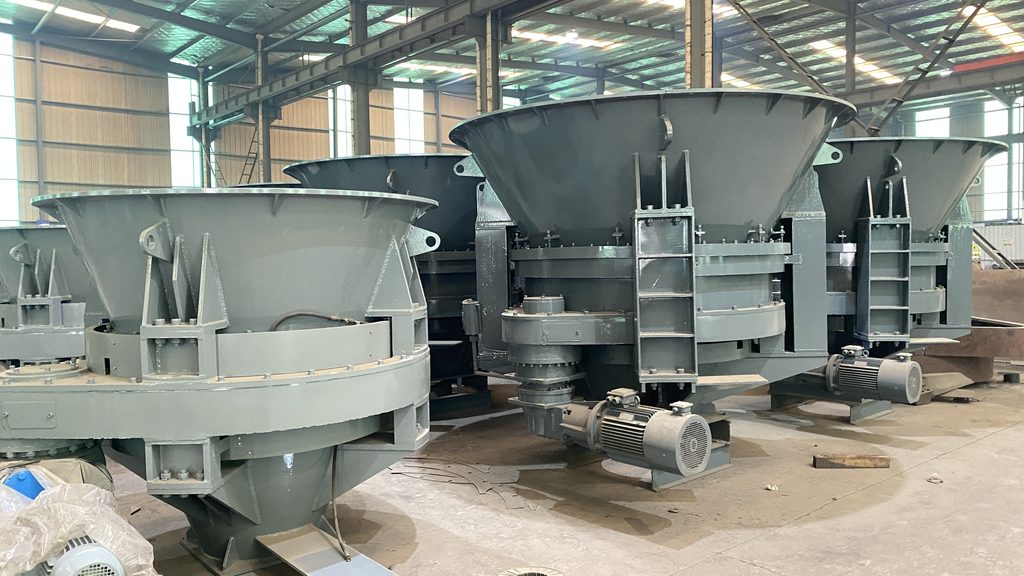
1. Outlet Size: The Key Factor in Preventing Material Arching
Outlet size is one of the most important considerations when selecting a silo anti-blocking device. An undersized discharge opening can cause material arching, which generally occurs through two mechanisms: mechanical interlocking and cohesive arching.
Mechanical Interlocking
Mechanical interlocking occurs when large particles physically lock together, forming an obstruction above the discharge outlet.
For circular outlets, engineering experience suggests that the outlet diameter should generally be approximately 6–8 times the maximum particle size. For wedge-shaped or slotted outlets, the opening width should typically be at least 3–4 times the maximum particle size.
When the outlet-to-particle size ratio becomes too small, mechanical interlocking becomes more likely, resulting in unstable material flow and frequent blockages.
Cohesive Arching
Cohesive arching occurs when fine particles adhere to one another due to cohesive forces, moisture, or other material properties.
Unlike mechanical interlocking, cohesive arching cannot be reliably prevented by applying a simple particle-size multiplier. The required outlet dimensions should instead be determined through material flow-function testing and Jenike-based calculations.
These methods help establish the critical outlet diameter needed to overcome the material’s cohesive strength under the relevant operating conditions.
Important: A silo anti-blocking device can help restore material flow in existing installations, but it cannot completely compensate for a fundamentally undersized discharge outlet. For new silo projects, outlet dimensions and cone angles should be designed according to the material’s flow characteristics.
2. Silo Diameter: Determining the Scraper Arm Configuration
The silo diameter determines the working area that the silo anti-blocking device must cover. It also influences the number, length, and arrangement of scraper arms.
Different silo diameters require different equipment configurations.
Small-Diameter Silos (Approximately 3 m or Less)
For small silos, a single-arm or single-shaft rotary anti-blocking device installed at the center of the silo is often sufficient.
The scraper blade radius should be designed according to the outlet dimensions and the geometry of the conical section. Proper coverage helps eliminate stagnant areas where material could accumulate and form blockages.
Large-Diameter Silos (Over 5 m)
For large-diameter silos, a single scraper arm may not provide sufficient coverage.
Common solutions include:
- Multi-shaft configurations: Multiple scraper shafts can be installed with a typical spacing of approximately 2–3 meters, depending on the silo geometry.
- Extended scraper arms: Longer scraper blades can reach farther into the conical section.
- Telescopic scraper systems: Adjustable scraper arms can extend to cover a larger working area.
The final configuration should ensure effective coverage of the entire target discharge area while maintaining sufficient structural strength and operating torque.
Air Cannons and Silo Wall Vibrators
Silo diameter also affects the arrangement of auxiliary flow-aid equipment, such as air cannons and wall vibrators.
For larger conical silos, multiple units may be required at different vertical positions to improve material flow coverage. Their installation locations should be determined according to the silo structure, material properties, and discharge characteristics.
3. Outlet Dimensions: Ensuring Equipment Compatibility and Complete Coverage
In addition to preventing material arching, outlet dimensions directly determine the installation size of a rotary silo anti-blocking device.
Rotary arch breakers and other mechanical flow-aid devices are generally connected to the silo discharge opening through a flange.
The equipment dimensions, nominal diameter, and scraper configuration must be matched to the actual outlet geometry to ensure proper installation and effective material discharge.
Industrial silo anti-blocking equipment is available in a wide range of sizes, typically from DN150 to DN3000. Scraper blade length, installation angle, and material can be customized according to the outlet dimensions, material characteristics, and required discharge capacity.
Small Outlet Applications
For small powder discharge outlets, such as DN200 openings, compact rotary scrapers are commonly used.
These devices typically feature motors ranging from 0.37 to 1.5 kW, depending on the material properties and operating requirements.
Large Outlet Applications
For large-scale coal silos, raw material storage silos, and other industrial bulk storage systems with meter-scale outlets, larger and higher-capacity rotary anti-blocking devices are required.
The equipment must provide sufficient scraper coverage and torque to prevent material accumulation around the discharge area.
If the effective working diameter of the equipment is smaller than the required discharge area, an inaccessible ring-shaped dead zone may remain around the connection point, increasing the risk of material buildup.
Therefore, checking the equipment diameter, flange dimensions, and scraper coverage is essential before installation.
4. HNMY Silo Anti-Blocking Devices: Customized Solutions for Different Silo Sizes
| Type | Upper Silo Interface Diameter | Lower Silo Interface Diameter | Motor power | Cpacity |
| MY-XZQD-I | 1000~1500mm | 450~660mm | 1.5~4kW | 50t/h |
| MY-XZQD-II | 1500~2000mm | 660~1000mm | 2~4kW | 100t/h |
| MY-XZQD-III | 2000~3000mm | 1000~2000mm | 5.5~11kW | 100~600t/h |
| MY-ZNWX-I | 1200~2000mm | 300~1100mm | 2.2~5.5kW | 60t/h |
| MY-ZNWX-II | 1600~2200mm | 450~1200mm | 2.2~5.5kW | 120t/h |
5. Why Larger Silo Diameters Require Higher Motor Power and Torque
Silo diameter does not just determine the number and length of scraper arms. It also directly affects the drive system requirements of a silo anti-blocking device.
As the silo diameter increases, scraper arms generally become longer and encounter greater resistance during operation. This increases the torque required to rotate the scraper system, particularly when handling compacted or cohesive materials.
Taking Mingyu rotary anti-blocking devices as an example:
- Type I: Designed for upper opening diameters of approximately 1,000–1,500 mm, with motor power ranging from 1.5 to 4 kW.
- Type III: Designed for upper opening diameters of approximately 2,000–3,000 mm, with motor power ranging from 5.5 to 11 kW.
These devices typically use high-torque gear reducers to provide sufficient starting torque, including under material-loaded conditions.
The scraper-to-wall clearance can be maintained within approximately 5 mm, depending on the equipment configuration and silo geometry. This helps minimize material accumulation while avoiding unnecessary contact with the silo structure.
The key point: Selecting a silo anti-blocking device with insufficient motor power or torque may result in poor operating performance, especially when dealing with high-moisture or cohesive bulk materials.
6. How to Select the Right Silo Anti-Blocking Device: Three Essential Steps
To select the appropriate silo anti-blocking device, we recommend following these three steps:
Step 1: Measure the Silo Diameter
Measure the diameter of the silo cylinder and the widest section of the conical bottom.
These dimensions help determine:
- Overall equipment size.
- Number of scraper arms or shafts.
- Scraper length and working radius.
- Required motor power and output torque.
Step 2: Measure the Discharge Outlet
Measure the actual outlet diameter and check the connecting flange specifications.
Confirm that the selected equipment is compatible with the outlet opening and that the scraper blades can effectively cover the required discharge area.
Step 3: Confirm Material Properties and Equipment Specifications
Compare the measured silo dimensions with the manufacturer’s equipment specifications.
In addition to silo diameter and outlet size, consider:
- Material type and bulk density.
- Maximum particle size.
- Moisture content and cohesiveness.
- Required discharge capacity.
- Operating conditions and installation space.
These factors help determine the appropriate equipment model, motor power, scraper configuration, and material selection.
7. Conclusion: Silo Diameter and Outlet Size Are Essential to Equipment Selection
Choosing the right silo anti-blocking device requires a comprehensive understanding of silo geometry and material flow characteristics.
Silo diameter determines the overall equipment dimensions, scraper arm configuration, and required drive torque. Outlet size determines installation compatibility, discharge capacity, and whether the scraper system can effectively cover the target discharge area.
An undersized outlet may also create inherent arching problems that mechanical flow-aid equipment cannot fully resolve.
For this reason, accurate measurements and proper engineering evaluation are essential before selecting a silo anti-blocking device.
Looking for a suitable silo anti-blocking solution?
Contact HNMY with your silo diameter, outlet dimensions, material type, and required discharge capacity. Our team can help evaluate your application and recommend an appropriate rotary anti-blocking device for your silo.