
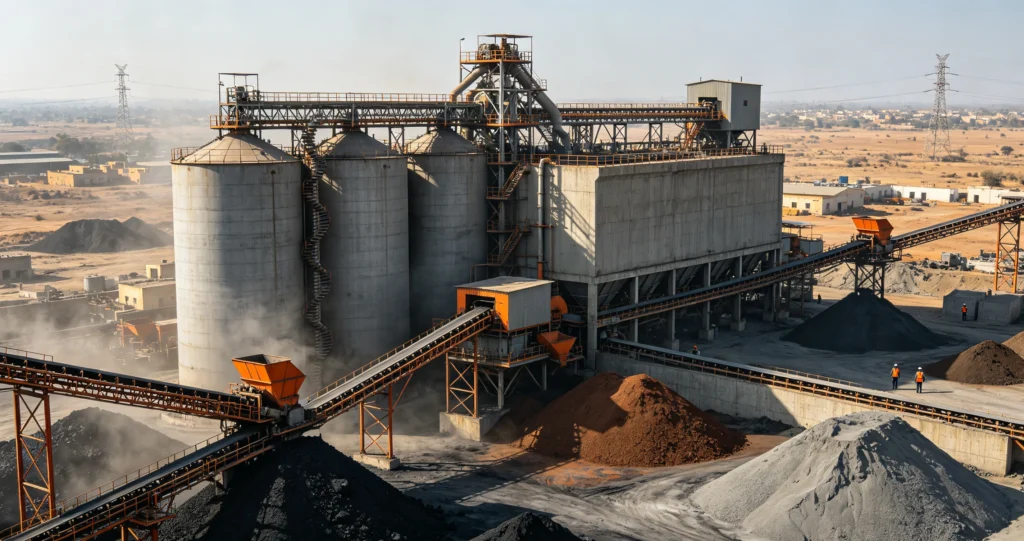
India’s power generation, cement manufacturing, and mining industries depend on the continuous storage, transfer, and discharge of large volumes of bulk materials.
Typical materials include raw coal, fine coal, fly ash, cement raw meal, limestone powder, mineral powder, ore fines, slag, and other cohesive bulk solids.
Although these materials differ in particle size, moisture content, density, and flowability, they often create similar problems during storage and conveying. Material may accumulate on silo walls, form bridges above discharge outlets, flow through narrow channels, or stop moving altogether.
In practice, these problems can affect coal bunkers, fly ash silos, powder storage silos, hoppers, and transfer chutes.
Common issues include:
- Material bridging
- Ratholing
- Wall buildup
- Caking and compaction
- Poor or intermittent discharge
- Hopper blockage
- Chute blockage
- Uneven material flow
When material flow becomes unstable, downstream processes may also be affected. In power plants, this can interfere with coal feeding or ash handling. In cement plants, poor material discharge may affect batching and process stability. In mining and mineral processing systems, a blocked hopper or chute can interrupt the movement of material through the production line.
The following sections look at the main bulk material flow challenges across India’s power, cement, and mining industries and the types of solutions that can be considered for existing silos and material handling systems.
1. Why Do Silo and Hopper Blockages Occur?
Silo blockage is rarely caused by a single factor.
In most cases, the problem develops through a combination of material characteristics, moisture, storage conditions, equipment geometry, and material flow patterns.
Material Characteristics
Fine particles generally behave differently from coarse bulk materials.
Materials with a high proportion of fines may become compacted more easily and can show stronger cohesive behavior. When moisture is present, particles may adhere to each other or to the silo wall.
Depending on the material, this may result in:
- Wall adhesion
- Caking
- Compaction
- Bridging
- Ratholing
- Flow channeling
The longer material remains inside the silo, the greater the possibility of compaction or wall buildup.
Moisture and Environmental Conditions
Moisture can significantly change the flow behavior of coal, mineral fines, powders, and other bulk materials.
High humidity, rainfall, wet material handling, and changes in storage conditions can increase the risk of material adhesion and agglomeration.
For outdoor or partially enclosed material handling systems, changes in environmental conditions may also cause the same material to behave differently at different times of the year.
Silo and Hopper Geometry
Material flow is also influenced by the physical design of the storage system.
Important factors include:
- Silo diameter
- Hopper angle
- Outlet size
- Wall geometry
- Internal structures
- Material flow path
- Existing flow aids
If the material does not move uniformly toward the outlet, stagnant zones may develop. Material in these areas can remain stationary while the central portion continues to discharge.
Over time, this can lead to rat-holing, wall buildup, or complete flow interruption.
2. Coal and Fly Ash Handling in Thermal Power Plants
Raw Coal Silo and Coal Bunker Blockage
Coal handling systems require a stable and continuous supply of fuel.
However, raw coal and fine coal may experience flow problems when particle size, moisture content, storage time, and bunker geometry are unfavorable.
Common problems include:
- Coal sticking to bunker walls
- Bridging above discharge openings
- Rat-holing
- Fine coal compaction
- Uneven coal flow
- Intermittent discharge
These problems may require operators to repeatedly intervene in order to restore normal material flow.
For recurring coal bunker blockage, the underlying cause should be evaluated rather than focusing only on breaking the blockage after it occurs.
Related solution: Coal Bunker Blockage Solutions for Thermal Power Plants in India
Fly Ash Silo Flow Problems
Fly ash is a fine powder that may create storage and discharge challenges, particularly when material characteristics and silo conditions encourage wall adhesion or compaction.
Typical problems include:
- Wall buildup
- Bridging
- Ratholing
- Caking
- Poor discharge
- Intermittent material flow
The location of the blockage is also important.
Some problems occur near the discharge outlet, while others develop gradually along the silo wall or in stagnant zones inside the storage vessel.
Different blockage locations may require different flow-assisting approaches.
Related solution: How to Prevent Fly Ash Silo Blockage in Thermal Power Plants
3. Cement Plant Silo and Hopper Flow Problems
Cement plants handle a wide range of bulk powders and fine materials.
Depending on the production process, these may include:
- Cement powder
- Cement raw meal
- Fly ash
- Limestone powder
- Coal powder
- Other mineral additives
These materials may have different flow characteristics, but several common problems can occur during storage and discharge.
For example, material may remain attached to the silo wall while only the central portion continues to flow. In other cases, material may compact above the outlet and create intermittent or unstable discharge.
This can result in problems such as:
- Uneven material flow
- Interrupted discharge
- Material buildup
- Fluctuating feed rates
- Increased manual cleaning
For cement production systems, stable material discharge is particularly important where accurate feeding and continuous processing are required.
Related solution: Silo and Hopper Blockage Problems in Cement Plants
4. Mining and Mineral Processing Applications
Mining and mineral processing operations often handle materials with widely varying particle sizes and moisture levels.
Examples include:
- Iron ore fines
- Mineral powder
- Coal
- Fine slag
- Other cohesive bulk materials
Fine or sticky materials may have poor flowability, particularly after prolonged storage or when moisture is present.
Common problems include:
- Hopper blockage
- Material bridging
- Arch formation
- Wall buildup
- Chute blockage
- Intermittent discharge
When a hopper or transfer chute becomes blocked, the problem can affect upstream and downstream equipment.
For this reason, improving material flow at critical transfer and storage points can be an important part of maintaining stable plant operation.
Related solution: Bulk Material Flow Solutions for Mining and Mineral Processing
5. How India’s Climate Can Affect Bulk Material Flow
Environmental conditions can influence the flow behavior of many bulk materials.
High humidity, rainfall, and moisture fluctuations can increase the tendency of fine or cohesive materials to adhere, agglomerate, or compact.
For materials such as fine coal, mineral powder, and other moisture-sensitive bulk solids, this may increase the risk of:
- Caking
- Wall adhesion
- Bridging
- Material hardening
- Poor discharge
However, climate conditions alone are not usually the only cause of blockage.
The severity of the problem also depends on material characteristics, storage time, silo design, and the existing discharge system.
A material flow solution should therefore be based on the actual operating conditions of the equipment rather than environmental factors alone.
6. Limitations of Traditional Blockage Removal Methods
Different plants use different methods to deal with blockage problems.
Common approaches include manual cleaning, air cannons, vibrators, and other external flow aids.
These methods can be useful in certain applications, but their effectiveness may vary depending on the type and location of the blockage.
Manual Cleaning
Manual cleaning may be necessary when other methods cannot restore material flow.
However, it can involve:
- Production interruption
- High labor requirements
- Maintenance downtime
- Dust exposure
- Confined-space risks
If the same blockage occurs repeatedly, manual cleaning may only restore temporary operation without addressing the reason the material continues to accumulate.
Air Cannons
Air cannons can be effective for disturbing material and breaking localized bridges.
However, their performance may be limited when dealing with:
- Thick wall buildup
- Large stagnant zones
- Heavily compacted material
- Persistent material adhesion
Vibrators
Vibration equipment can assist the movement of some bulk materials.
However, when the blockage is caused by thick wall deposits, deep material compaction, or unfavorable internal flow patterns, vibration alone may not provide a long-term solution.
The appropriate method depends on the material, the silo structure, and the actual blockage mechanism.
7. Mechanical Silo Blockage Prevention and Flow Assistance
For recurring blockage problems, the goal is not only to remove material after flow stops.
It is also important to reduce the conditions that allow material to accumulate in stagnant areas or form stable bridges.
A mechanical flow-assisting system can interact directly with material inside the silo and help disturb material near critical blockage zones.
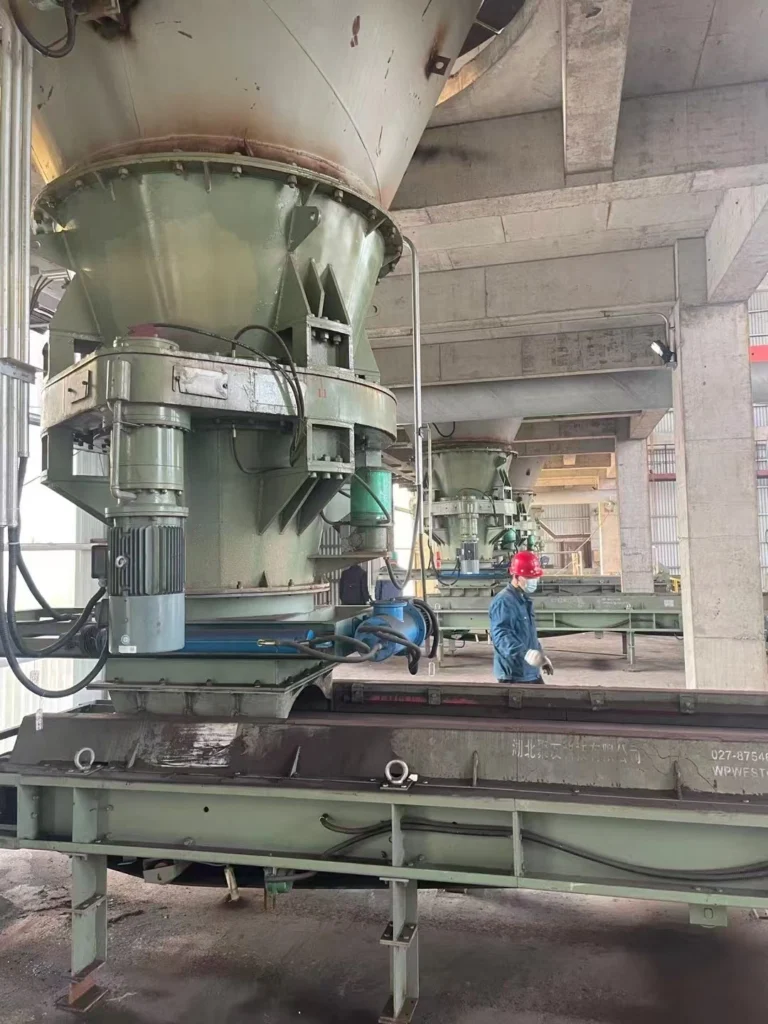
HNMY’s Intelligent Variable Inclination Vortex Anti-Blocking Machine is designed for this type of application.
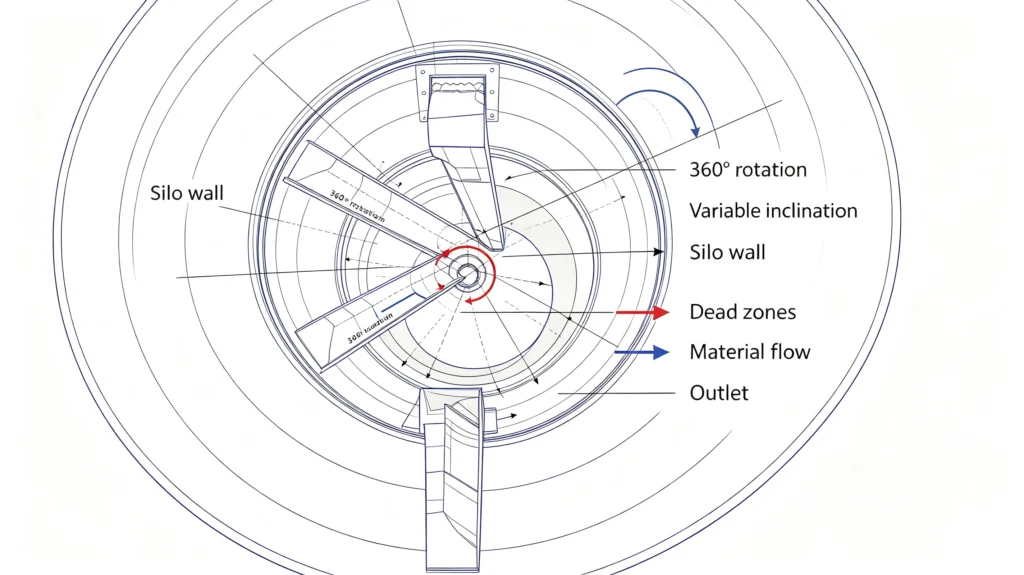
360° Variable-Inclination Mechanical Cleaning
The system uses a rotating mechanical structure with a variable working angle to interact with material inside the silo.
By moving through the material near the silo wall, the equipment can help:
- Disturb stagnant material
- Reduce wall buildup
- Change local material flow patterns
- Increase material movement near critical areas
- Reduce the formation of bridges and rat-holes
- Improve discharge consistency
The objective is to provide continuous or scheduled mechanical flow assistance rather than relying only on emergency blockage removal.
Learn more about the Intelligent Variable Inclination Vortex Anti-Blocking Machine
Automated Operation
Depending on the project configuration, the system can support automated operation.
Possible functions include:
- Scheduled operation
- Automatic start and stop
- Coordinated operation with existing material handling equipment
- Reduced manual intervention
This can help reduce the frequency of emergency manual cleaning where recurring blockage is a problem.
8. Retrofit Solutions for Existing Silos and Bunkers
Replacing an existing silo is not always necessary when material flow problems occur.
In many industrial facilities, the preferred approach is to evaluate whether the existing silo, bunker, or hopper can be upgraded with additional flow-assisting equipment.
Before selecting a solution, several factors should be considered:
- Material type
- Particle size
- Moisture content
- Bulk density
- Silo diameter
- Inlet dimensions
- Outlet dimensions
- Hopper geometry
- Existing blockage locations
- Installation space
- Operating capacity
Based on these conditions, a suitable configuration can be considered for the existing system.
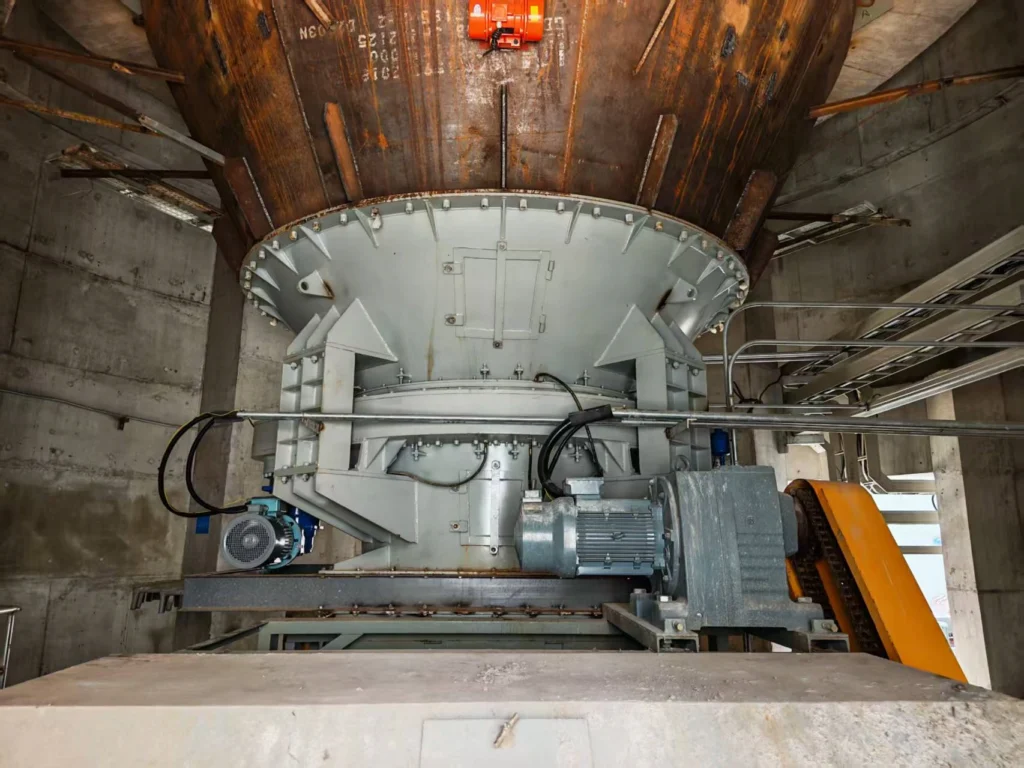
HNMY’s equipment can be integrated into existing material storage systems through project-specific engineering and matching structural components where required.
Related solution: How to Retrofit Existing Silos and Coal Bunkers to Prevent Material Blockage
9. Applications for Power, Cement and Mining Projects in India
Mechanical anti-blocking and flow-assisting systems can be considered for a range of bulk material storage applications.
Power Plants
- Raw coal silos
- Coal bunkers
- Fine coal storage
- Fly ash silos
- Ash handling systems
Cement Plants
- Cement powder silos
- Raw meal silos
- Fly ash storage
- Limestone powder storage
- Other bulk powder systems
Mining and Mineral Processing
- Ore bins
- Mineral powder silos
- Storage hoppers
- Transfer points
- Material handling chutes
For each project, the equipment configuration should be based on the actual material properties and existing equipment conditions.
10. Information Needed for an Existing Silo Blockage Project
For a power plant, cement plant, mining operation, or EPC retrofit project, the following information can help evaluate a suitable solution:
- Material type
- Particle size
- Moisture content
- Bulk density
- Silo or bunker dimensions
- Inlet diameter
- Outlet diameter
- Hopper angle
- Material handling capacity
- Current blockage location
- Existing blockage removal equipment
- Installation drawings or photographs, if available
This information can help determine the type of material flow problem and whether a mechanical retrofit solution is suitable.
Silo Blockage Solutions for Industrial Applications in India
Stable material flow is essential for continuous operation in power generation, cement manufacturing, mining, and other bulk material handling industries.
Problems such as bridging, rat-holing, wall buildup, caking, hopper blockage, and chute blockage can develop from a combination of material characteristics, moisture conditions, storage time, equipment geometry, and internal flow patterns.
For recurring blockage problems, evaluating the actual cause and location of material accumulation is often more effective than repeatedly applying temporary clearing methods.
HNMY provides mechanical anti-blocking and material flow-assisting solutions for coal, fly ash, powders, mineral materials, and other difficult-flowing bulk solids.
For existing silo and bunker retrofit projects, equipment configuration can be evaluated based on material properties, silo geometry, operating capacity, and installation conditions.
Have a silo, bunker, hopper, or chute blockage problem? Contact HNMY with your material information, equipment dimensions, capacity, and current operating conditions to discuss a suitable solution.