
As Vietnam’s industrial sector continues to develop, production scales in industries such as thermal power generation, cement, metallurgy, chemicals, and mineral processing are expanding. Consequently, the storage, conveying, and stable discharge of bulk materials have become critical components of industrial production. The flow characteristics of materials—such as raw coal, ore, fly ash, cement powder, and chemical powders—directly impact the continuous operation and productivity of production lines.
Certain industrial regions in Vietnam experience high temperatures, high humidity, and seasonal rainfall. Factors such as fluctuating material moisture content, fine particle content, material cohesiveness, storage duration, and silo design can increase the risk of issues like wall adhesion, caking, bridging, rat-holing, and uneven discharge.
For industrial production lines requiring continuous operation, recurring silo blockages not only increase the burden of manual clearing and maintenance but can also lead to interrupted material supply, reduced productivity, and unplanned downtime. Therefore, designing reliable bulk material flow solutions tailored to specific materials and existing silo operating conditions is a key priority for industrial enterprises seeking to enhance operational stability.
Typical Issues in Bulk Material Handling in Vietnam’s Industry
Material Wall Adhesion and Accumulation
High-humidity environments, combined with variations in material moisture content, fine particle levels, and cohesiveness, can cause materials—such as coal, ore fines, fly ash, and cement powder—to form an adhered layer on the inner walls of the silo.
Over time, these deposits accumulate and harden, reducing the effective discharge space and potentially creating zones of stagnant material.
Bridging and Arching
When materials possess strong cohesive properties or undergo compaction, stable arches or bridge structures can form within the silo.
Once bridging occurs, gravity alone is insufficient to discharge the material, leading to flow interruptions that disrupt downstream conveying and the continuous operation of production equipment.
Ratholing and Off-Center Flow
In some silos, material may form a preferential flow channel in the center, while material near the silo walls remains stagnant for extended periods. This “rat-holing” phenomenon reduces the effective flow area, leading to the long-term stagnation, accumulation, and further solidification of material along the periphery.
Uneven discharge and periodic blockage
When material flow is unstable, discharge rates may fluctuate, flow may be intermittent, and periodic blockages may occur.
In continuous production systems—such as those for cement proportioning, coal conveying, fly ash discharge, and mineral processing—such issues can further compromise production stability.
Impact of climate, material properties, and silo structure on flow performance
Certain regions in Vietnam experience consistently high temperatures and humidity, while seasonal rainfall causes fluctuations in material moisture content. For moisture-sensitive powders and bulk solids, changes in moisture content can alter flow characteristics and cohesiveness.
Additionally, factors such as particle size distribution, fines content, storage duration, and compaction state influence silo discharge performance.
Beyond material properties, the silo’s geometry, outlet dimensions, hopper angle, and internal flow patterns are equally critical. The presence of stagnant zones or preferential flow channels within the silo increases the likelihood of wall adhesion, bridging, rat-holing, and uneven discharge.
Consequently, silo blockages rarely stem from a single cause; rather, they result from the interplay of material properties, environmental conditions, silo structure, and operational practices.
Limitations of traditional silo blockage removel methods
Common industrial methods for addressing blockages include manual cleaning, air cannons, and silo wall vibrators.
Manual clearance requires scheduled downtime and maintenance, while also entailing safety risks such as dust exposure, material collapse, and confined-space operations. Furthermore, manual cleaning addresses existing blockages but fails to prevent the formation of new accumulations.
Air cannons break up material arches via instantaneous high-pressure air blasts; while effective in certain scenarios, their range is limited, and performance may be inconsistent when dealing with thick layers of wall adhesion, severe caking, or deep-seated accumulations. While silo wall vibration equipment can improve material flow under certain conditions, its effectiveness may be limited when dealing with thick accumulated layers, severe caking, or deep-seated blockages. Long-term use also requires careful consideration of the vibration’s impact on the silo structure, welds, and internal linings.
Consequently, for industrial silos experiencing chronic, recurring blockages, relying solely on conventional blockage-clearing methods often fails to resolve persistent material accumulation and flow dead zones.
Bulk Material Flow Solutions Tailored for Industrial Operations in Vietnam
To address issues such as wall adhesion, material accumulation, bridging, ratholing, and unstable discharge in existing silos, HNMY offers mechanical anti-blocking and bulk material flow solutions.
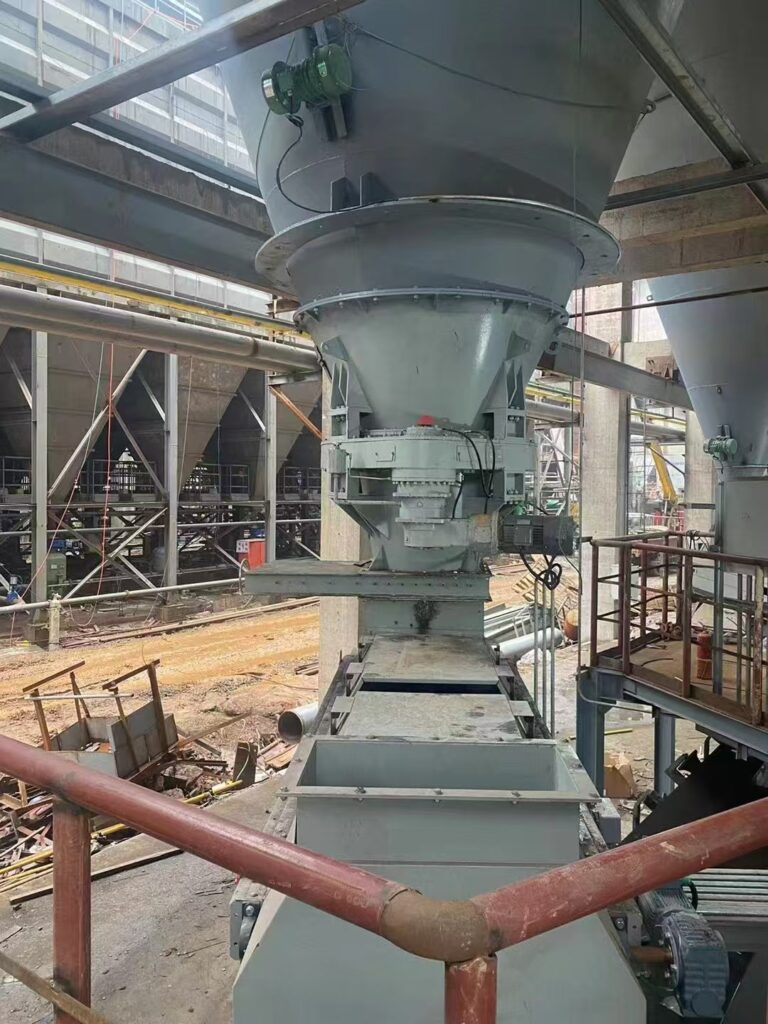
The HNMY Intelligent Variable-Inclination Vortex Anti-Blocking Machine utilizes a 360° rotating, variable-inclination sweeping mechanism that continuously acts on the material zone near the silo wall.
360° Variable-Inclination Vortex Sweeping
The equipment’s sweeping mechanism rotates 360° within the silo and adjusts its operating inclination based on the silo’s structure and actual operating conditions.
By continuously clearing material adhering to the silo walls, agitating stagnant zones, and altering local flow dynamics, the equipment helps minimize accumulation, expand the effective flow area, and improve overall discharge performance.
This mechanical flow-aid method is particularly suitable for silos already in operation; designs can be customized based on silo dimensions, discharge conditions, and available on-site installation space.
Retrofitting Existing Silos
For industrial silos already in service, constructing an entirely new storage system is not necessarily required.
HNMY equipment can be integrated with existing silo structures, inlet/outlet dimensions, and installation conditions, with retrofitting completed using appropriate transition sections and support structures.
This makes the system well suited for existing silo retrofit projects, allowing for tailored designs that address specific blockage locations and flow issues at various industrial sites.
Automated Operation
The system supports automatic scheduled operation and can be linked to the production system for start/stop control, thereby reducing the need for frequent manual clearing.
By minimizing the frequency of manual intervention and the need for clearing operations in confined spaces, the system helps industrial enterprises reduce downtime caused by blockages and enhances the continuity and stability of silo operations.
Applicable Industries and Materials
HNMY’s solutions for bulk material flow and silo anti-blockage can be applied to various industrial scenarios in Vietnam and other markets.
Thermal Power Generation
Suitable for bulk material storage systems such as raw coal silos and fly ash silos, helping to address issues such as:
Coal silo blockage
Coal bridging
Rat-holing
Fly ash buildup
Fly ash bridging
Unstable discharge
Cement and Building Materials
Suitable for storage and discharge systems handling cement powder, mineral powder, and other powdered materials, helping to reduce:
Wall buildup
Caking
Bridging
Poor discharge
Material flow interruption
Metallurgy, Mining, and Chemicals
Suitable for systems handling mineral powder, ore, chemical powders, and other bulk solid materials; tailored anti-blockage and flow-aid solutions are provided based on specific material properties and silo structures.
Value of Bulk Material Flow Solutions
For industrial enterprises in Vietnam, stable material flow is critical not only for silo operation but also for downstream conveying, proportioning, and production systems.
By reducing wall buildup, minimizing the risk of bridging and rat-holing, and improving discharge performance, mechanical anti-blockage and flow-aid solutions can help industrial enterprises:
- Support the retrofit and upgrade of existing silo systems
- Reduce the frequency of manual blockage clearing
- Reduce unplanned downtime caused by material blockages
- Improve the stability and consistency of material discharge
- Reduce the need for confined-space blockage removal operations
- Lower maintenance and operating costs associated with recurring blockages
- Improve the continuity and stability of downstream production processes
Conclusion
Industrial bulk material handling systems in Vietnam are influenced by various factors—including material properties, environmental conditions, silo structures, and operational methods. Issues such as wall adhesion, material accumulation, bridging, rat-holing, and unstable discharge can persistently plague continuous production enterprises.
Compared to relying solely on manual clearing or passive arch-breaking equipment, mechanical anti-blockage and flow-aid solutions customized for existing silo designs can help address persistent material accumulation and flow-related problems, improving the long-term stability of silo operation.