
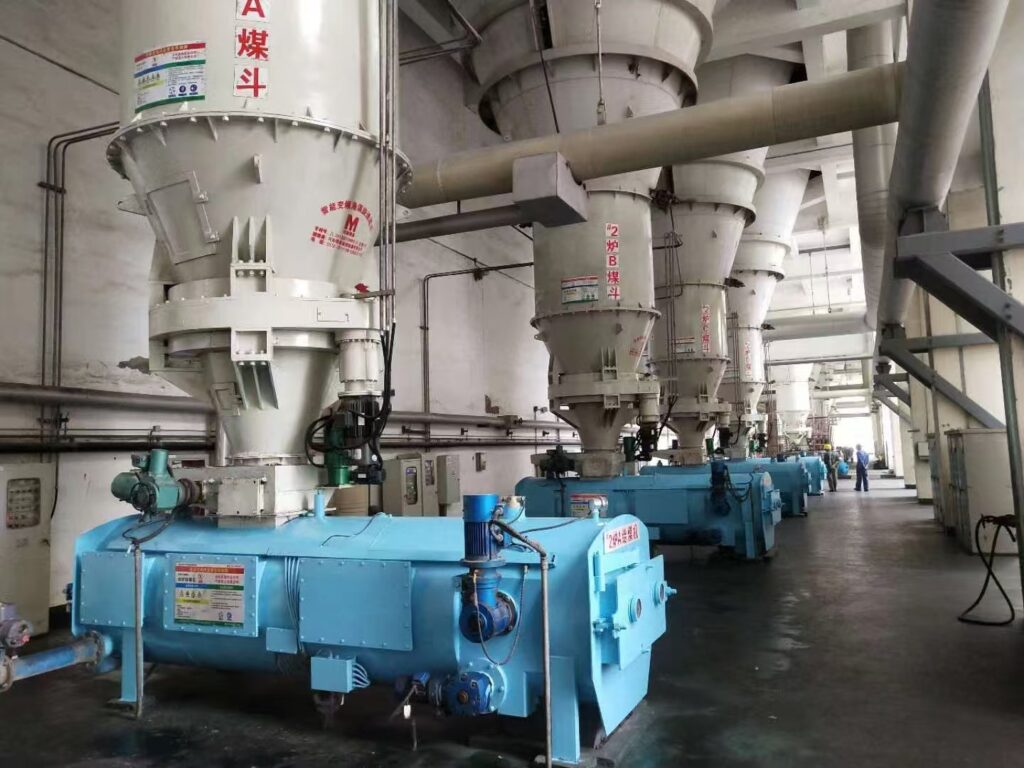
In India’s thermal power sector, silo blockage is a pervasive and critical challenge that compromises unit stability and limits power generation efficiency. Driven by factors such as regional climate, coal quality, and storage conditions, many thermal power plants in India experience issues such as wall adhesion, caking, arching (bridging), and flow interruptions in raw coal and fly ash silos. These problems not only raise O&M costs and safety risks but also lead to load fluctuations and reduced output, representing a major pain point for operational upgrades in local power plants.
1. Why Do Silo Blockages Occur in Indian Power Plants?
Coal and Material Characteristics
The characteristics of the coal itself play a significant role. The coal used by some Indian thermal power plants is often high in ash content and exhibits inconsistent particle sizes and moisture levels; these traits increase the risk of wall adhesion, caking, bridging, and flow channeling during storage and transport. Furthermore, the high proportion of fine coal powder makes the material prone to agglomeration and “rat-holing” (preferential flow channeling), resulting in intermittent discharge and unstable supply.
Moisture and Storage Conditions
Climatic conditions are a major factor. India’s monsoon season brings concentrated rainfall and high humidity; silos located outdoors or in semi-open structures are highly susceptible to moisture absorption, which exacerbates material adhesion and hardening. Seasonal fluctuations in temperature and humidity alter material moisture content and flow characteristics, while factors such as fine particle content, prolonged storage, and silo design further heighten the risks of bridging, channeling, and flow stoppage.
Additionally, many Indian power plants continue to rely on traditional blockage-clearing equipment, such as silo wall vibrators and air cannons. These devices offer only temporary relief for surface-level blockages and fail to remove stubborn layers of adhered material. As they address symptoms rather than root causes, blockages recur frequently, severely disrupting the continuous operation of coal handling and ash removal systems.
Silo Geometry and Flow Patterns
Silo geometry, outlet dimensions, hopper design, and material flow patterns can also affect discharge performance. Poor flow patterns may create stagnant zones, preferential flow channels, and uneven material movement, increasing the risk of bridging, rat-holing, and intermittent discharge.
2.Limitations of Traditional Silo Blockage Removal Methods
Currently, most Indian thermal power plants rely primarily on manual clearing, air cannon blasts, and vibration-based methods to address silo blockages—approaches that suffer from significant limitations. Manual silo cleaning requires shutting down the unit for maintenance; this process is not only time-consuming and labor-intensive—incurring high labor costs—but also entails significant safety risks such as material collapse, dust toxicity, and hazards associated with confined space operations.
Air cannons rely on high-pressure air blasts to break up material arches, but they have a limited effective range and are largely ineffective against highly moist, sticky coal or thick, compacted material layers; furthermore, long-term use can impact the silo lining, leading to equipment wear. Vibration equipment aids the flow of materials with good fluidity, but its effectiveness is often limited when dealing with thick layers of wall-adhering material, severe compaction, or deep-seated blockages; long-term use also necessitates consideration of the vibration’s impact on the silo structure, welds, and lining.
3. Silo Blockage Solution Tailored for Indian Power Plants
Given the specific operating conditions of Indian power plants—characterized by variations in moisture content, material cohesiveness, fine-particle content, and operating conditions—the intelligent vortex-based automatic anti-blockage system provides a targeted mechanical solution for recurring silo blockage problems.. The system can be integrated with existing silo structures, inlet/outlet dimensions, and installation constraints through the use of matching transition sections and support structures.
360° Variable-Inclination Vortex Cleaning
The HNMY Intelligent Variable Inclination Vortex Anti-Blocking Machine uses 360° rotating blades with variable inclination to continuously interact with material near the silo wall.
By scraping material buildup near the silo wall and changing the local material flow direction, the machine helps reduce stagnant zones, improve the effective flow area, and enhance the overall flow pattern inside the silo. This mechanical flow-assisting principle helps reduce the recurrence of wall buildup, bridging, and uneven discharge.
Automated Operation
The entire system supports fully automated scheduled operation, coordinated start/stop functions, and unattended operation largely replacing high-risk, inefficient manual blockage-clearing operations. It effectively avoids losses associated with downtime, reduces O&M costs and helps reduce safety risks associated with manual blockage clearing, eliminates safety hazards, and comprehensively enhances the operational stability of coal handling and ash removal systems in Indian power plants.
4. Applications in Coal and Fly Ash Silos
Coal Silo Blockage
For raw coal silos affected by wall buildup, bridging, rat-holing, uneven flow, or intermittent discharge.
Fly Ash Silo Blockage
For fly ash silos affected by wall adhesion, caking, bridging, rat-holing, or unstable discharge.
Conclusion
Silo blockage is a persistent and widespread challenge facing India’s thermal power industry. Traditional blockage-clearing methods can have limitations when dealing with severe wall buildup, caking, bridging, and recurring flow interruptions.
HNMY provides mechanical silo blockage prevention and flow-assisting solutions for coal, fly ash, and other bulk materials. Our equipment can be integrated into existing silo systems according to material characteristics, silo geometry, outlet dimensions, and installation conditions, helping power plants improve material flow stability and reduce recurring blockage problems.